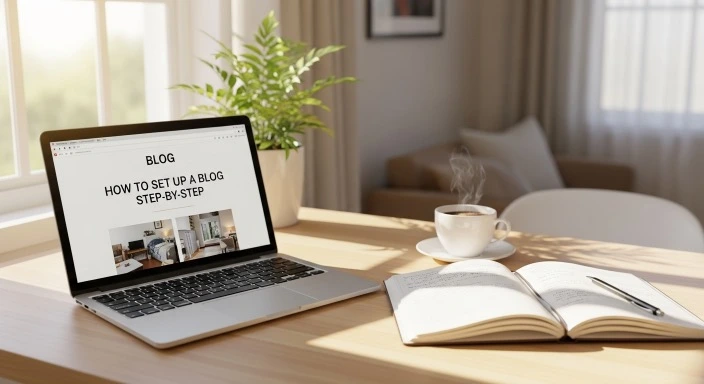
How to set up a blog step-by-step
Setting up a blog is often described as “simple,” yet many beginners feel overwhelmed before they even begin.
There are too many options.
Too many tools.
Too many opinions about what you should do first.
If you’re busy, learning as you go, or starting with limited confidence, that noise can make blogging feel heavier than it needs to be.
This guide exists to slow everything down.
Instead of trying to master every feature or follow every checklist, this article walks you through how to set up a blog step by step, focusing only on what actually matters at the beginning — and letting go of what doesn’t.
You don’t need to do everything today.
You just need a clear place to start.
First: What “Setting Up a Blog” Really Means
Before we go into steps, it helps to clarify expectations.
Setting up a blog does not mean:
- Designing a perfect website
- Learning every technical detail
- Publishing dozens of posts
- Having everything “figured out”
Setting up a blog simply means:
- Creating a stable foundation
- Making your blog accessible online
- Preparing it so content can be added calmly over time
If you haven’t read it yet, How Blogging Actually Works, explains why foundations matter more than speed.
Step 1: Choose One Clear Blogging Platform
One of the biggest sources of overwhelm is platform choice.
Many beginners worry they’ll choose the “wrong” platform and ruin everything. In reality, most blogging platforms work — but some are easier to grow with than others.
The goal here is stability, not perfection.
If you want a deeper breakdown, The Best Blogging Platform for Busy Beginners walks through this calmly. For now, what matters is choosing one platform you can grow into rather than switching repeatedly.
Once a platform is chosen, stop researching alternatives. That decision is done.
Step 2: Register a Domain and Hosting (Without Overthinking)
This step sounds technical, but it doesn’t need to be complicated.
Your domain is simply your blog’s address.
Your hosting is where your blog lives.
You do not need:
- The perfect name
- A clever brand
- A complex hosting setup
You do need:
- Something clear
- Something easy to remember
- Something you won’t want to change in a few months
Most beginners benefit from choosing a provider that handles setup steps in one place, even if it costs slightly more. Reducing friction early matters more than optimization.
Step 3: Install Your Blogging Software
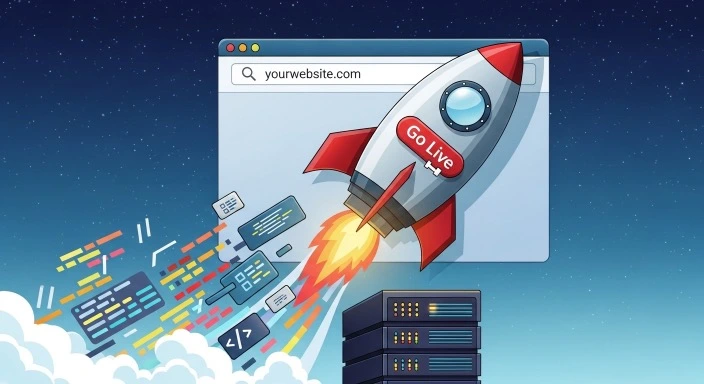
Once hosting is active, installing blogging software is usually a guided process.
This step is often automated and takes only a few minutes.
What matters here is not customization — it’s getting your site live.
At this stage:
- Default settings are fine
- Default design is fine
- Placeholder content is fine
You are building a starting point, not a final product.
Step 4: Choose a Simple Theme (Not a Perfect One)
Design is another common place where beginners get stuck.
Here’s the truth:
Your first blog design is temporary.
Choose a theme that is:
- Clean
- Easy to read
- Mobile-friendly
- Simple to customize later
Avoid themes that promise:
- “All-in-one solutions”
- Endless built-in features
- Heavy animations
Clarity matters more than creativity at the beginning.
Step 5: Set Up Only the Essential Pages
You do not need a full website structure right away.
At the beginning, focus on just a few core pages:
- Home
- About
- Contact
- Privacy Policy / Terms
These pages don’t need to be perfect. They simply tell visitors (and search engines) that your site is legitimate and intentional.
Your content will do the real work later.
Step 6: Adjust Basic Settings (Then Stop)
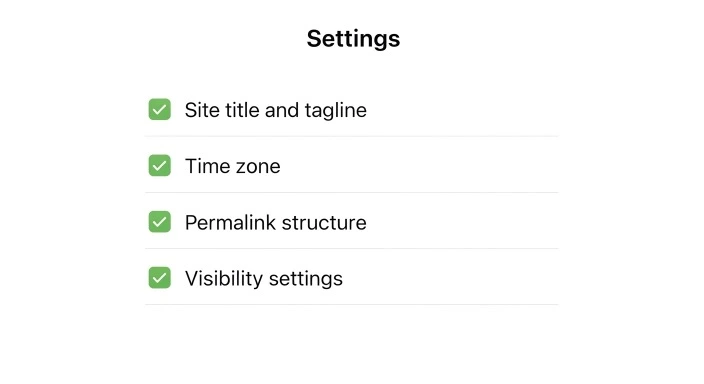
There are a few basic settings worth checking:
- Site title and tagline
- Time zone
- Permalink structure
- Visibility settings
Once these are set, resist the urge to keep tweaking.
Constant adjustments create mental noise without real benefit.
Step 7: Write and Publish One Simple Post
You do not need a launch plan.
You do not need multiple posts.
You need one clear, helpful article.
Choose a topic that:
- Helps a beginner
- Answers a real question
- Feels manageable to write
If time is limited, How to Write Blog Posts When You’re Short on Time explains how to approach writing without pressure.
Publishing one post turns your setup into a real blog.
Step 8: Accept That Setup Is Ongoing (And That’s Okay)
Your blog will evolve.
You’ll:
- Change wording
- Improve design
- Adjust structure
- Learn as you go
This is not failure — it’s how blogging works.
Trying to finish everything before you start often leads to delay. Starting imperfectly leads to progress.
Common Setup Mistakes to Avoid
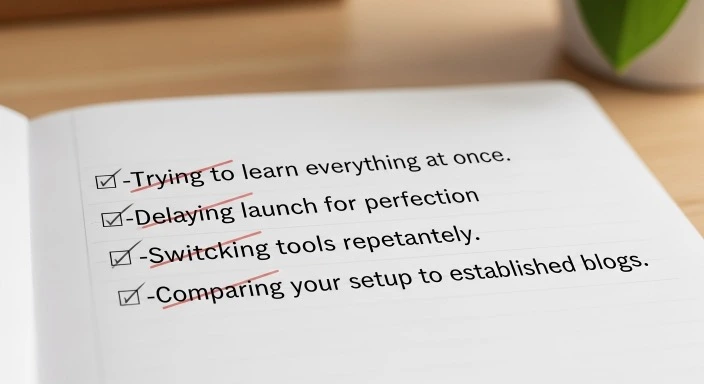
Trying to learn everything at once
This creates overwhelm without clarity.
Delaying launch for perfection
Perfection is not required to begin.
Switching tools repeatedly
Consistency matters more than optimization.
Comparing your setup to established blogs
Every established blog started simply.
Who This Setup Guide Is For (And Who It’s Not)
This guide is for you if:
- You’re busy or managing blogging alongside life
- You want clarity, not hype
- You prefer steady progress
- You want blogging to feel sustainable
This guide may not be for you if:
- You expect instant results
- You enjoy constant optimization
- You want fast income promises
There is nothing wrong with either approach — this guide simply supports calm, long-term growth.
Frequently Asked Questions
How long does it take to set up a blog?
Technically, a few hours. Mentally, it’s better to spread it over a few days.
Do I need to know how to code?
No. Most beginners never touch code.
Should I wait until everything is ready?
No. Blogging grows through iteration, not completion.
Can I change things later?
Yes. Almost everything can be adjusted over time.
Is it normal to feel unsure during setup?
Yes. Uncertainty is part of learning something new.
The Bottom Line
Setting up a blog does not need to be overwhelming.
You don’t need to master every feature.
You don’t need to get everything right.
You don’t need to move faster than your life allows.
You only need a stable starting point.
Once your blog is set up calmly, you can focus on what actually matters: writing helpful content, building confidence, and growing at a pace you can maintain.
Our Authority Sources
- Google Search Central – Clear explanations of how websites are discovered and evaluated
- Moz Blog – Beginner-friendly insights into sustainable site structure and growth
- Ahrefs Blog – Practical explanations of how blogs gain visibility over time
- Nielsen Norman Group – Research on usability, clarity, and cognitive load